


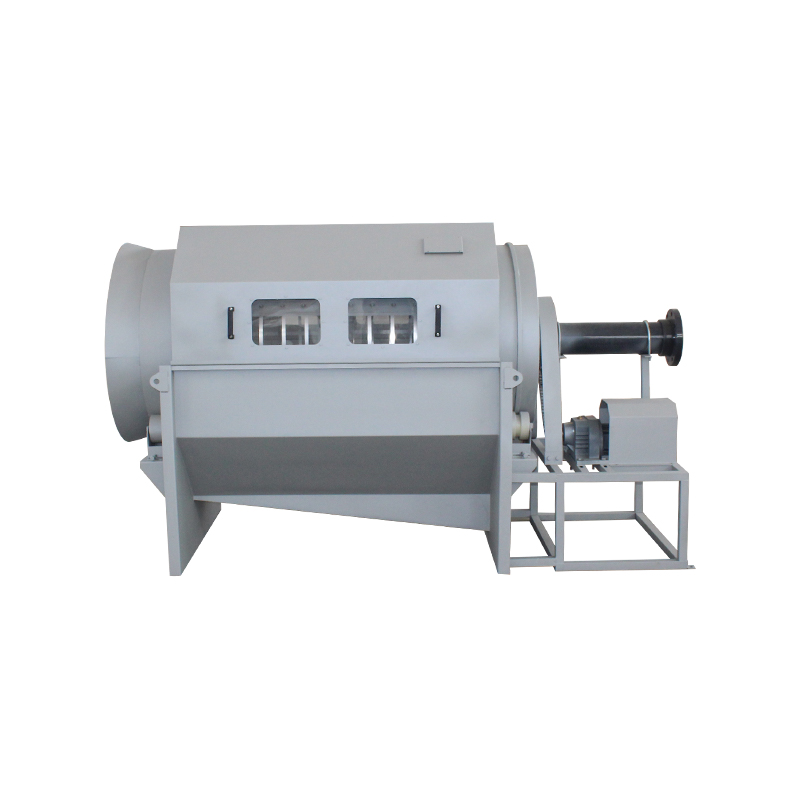
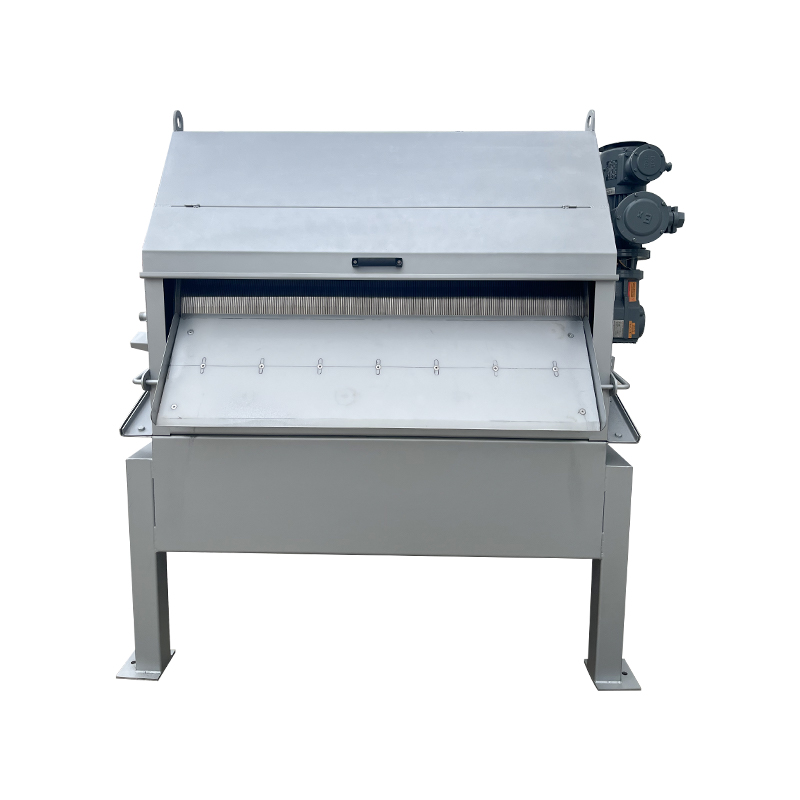
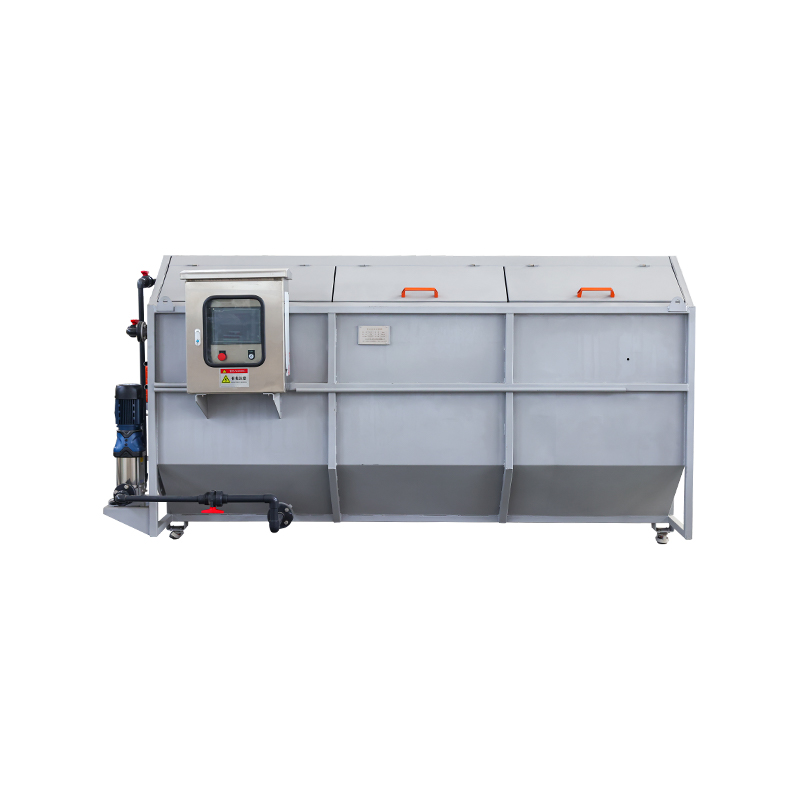
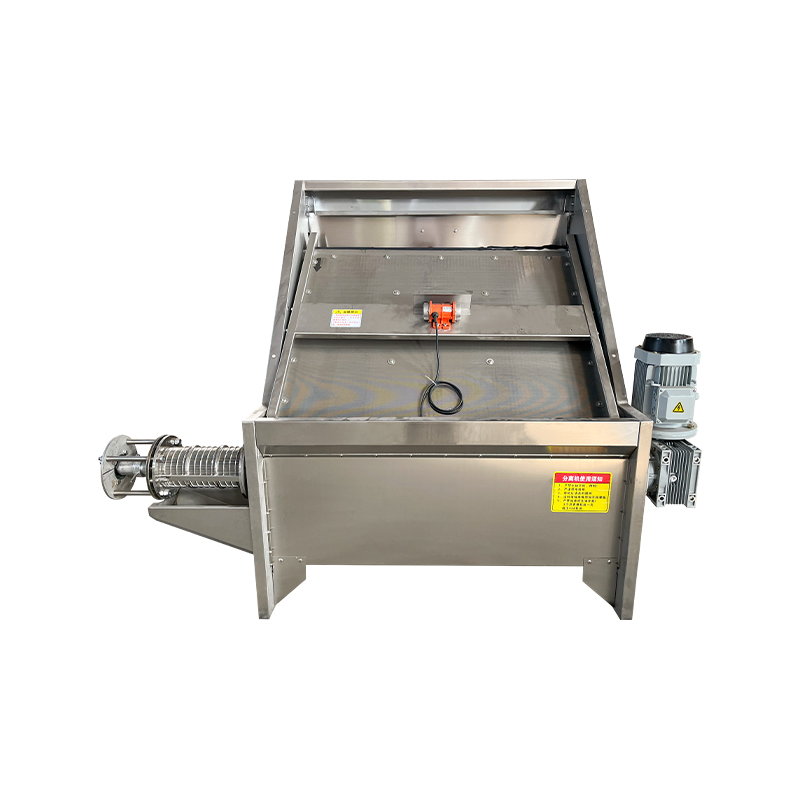
Máy vi lọc là một thiết bị tách chất lỏng rắn sử dụng sàng hoặc bộ phận lọc để bẫy chất rắn lơ lửng, hạt keo và các tạp chất khác trong nước; nó thuộc danh mục lọc vật lý. Chức năng cốt lõi của nó là loại bỏ các hạt lơ lửng, sợi, tảo, sinh vật phù du và các sinh vật khác có kích thước hạt từ 0,1 mm đến hàng chục micromet khỏi nước thông qua sàng cơ học. Nó thường được sử dụng trong các giai đoạn tiền xử lý hoặc xử lý nâng cao trong xử lý nước, giảm tải cho các quá trình xử lý tiếp theo và cải thiện chất lượng nước.
Cấu trúc cốt lõi và nguyên tắc làm việc
·Cấu trúc khóa: Chủ yếu bao gồm trống quay (hoặc hộp lọc), màn hình / tấm lọc, bộ truyền động, hệ thống rửa ngược, các bộ phận nước đầu vào và đầu ra, v.v. Vật liệu sàng chủ yếu là thép không gỉ và khẩu độ được thiết kế theo yêu cầu xử lý (thường là 0,05mm đến 0,5mm).
·Nguyên tắc làm việc: Khi nước thải chảy qua thiết bị, nước được thải qua lưới sàng và các tạp chất bị giữ lại trên bề mặt sàng; khi tạp chất tích tụ đến một mức độ nhất định, chúng sẽ được loại bỏ bằng cách rửa ngược (như xả nước hoặc không khí) hoặc cạo cơ học để đảm bảo hiệu quả lọc.
Phân loại và đặc điểm
Dựa trên sự khác biệt về hướng và cấu trúc dòng nước, bộ vi lọc chủ yếu được chia thành bộ vi lọc dòng chảy bên trong và bộ vi lọc dòng chảy bên ngoài. So sánh đặc điểm của chúng như sau:
| loại | Máy vi lọc dòng chảy bên trong | Máy vi lọc dòng chảy bên ngoài |
| Hướng dòng nước | Nước thải chảy từ trong thùng ra ngoài (từ trong ra ngoài). | Nước thải chảy từ ngoài thùng vào bên trong (từ ngoài vào trong). |
| Đặc điểm cấu trúc | Trống chứa một tấm xoắn ốc thu thập tạp chất và phần tử lọc là một tấm xốp. | Trụ lưới có tiết diện hình thang, mang lại khả năng chống tắc nghẽn mạnh mẽ. |
| Phương pháp rửa ngược | Máy bơm nước dẫn nước lọc đi rửa ngược các tấm lọc. | Nước có áp suất rửa ngược các tạp chất bị mắc kẹt trong màn lọc. |
| lợi thế hiệu suất | Nó có tính năng giảm áp suất thấp, tiết kiệm năng lượng và mức độ tự động hóa cao. | Thép không gỉ có khả năng chống ăn mòn, chiếm ít không gian và tạo ra xỉ có độ ẩm thấp. |
| Kịch bản áp dụng | Xử lý nước thải công nghiệp, lọc nước máy và xử lý nước thải tiên tiến. | Tiền xử lý nước thải trong các ngành công nghiệp như sản xuất giấy, da và chế biến thực phẩm. |
Lĩnh vực ứng dụng
·Xử lý nước đô thị: lọc nước thô tại các nhà máy nước (loại bỏ tảo, bọ chét nước, v.v.) và tiền xử lý hoặc xử lý nâng cao nước thải đô thị (giảm tải chất rắn lơ lửng).
·Lĩnh vực công nghiệp:
Công nghiệp dệt, sản xuất giấy, in và nhuộm: Loại bỏ sợi, bùn, chất rắn lơ lửng, v.v.
Công nghiệp thực phẩm và sản xuất bia: lọc cặn và chất keo;
Công nghiệp luyện kim và hóa chất: Tách chất lỏng rắn trước khi tái chế nước thải;
Nuôi trồng thủy sản: Làm sạch nước nuôi trồng thủy sản và loại bỏ các tạp chất như thức ăn thừa và phân.
Khi nhu cầu xử lý nước trở nên tinh tế hơn, các máy vi lọc đang phát triển theo hướng hiệu quả và trí thông minh cao hơn. Ví dụ: chúng có thể được kết hợp với công nghệ IoT để đạt được khả năng giám sát trạng thái vận hành theo thời gian thực hoặc được sử dụng kết hợp với các công nghệ lọc khác (chẳng hạn như lọc màng) để cải thiện khả năng loại bỏ các chất ô nhiễm dạng vết, đồng thời tối ưu hóa hiệu quả rửa ngược để giảm mức tiêu thụ năng lượng.
-
0+Hơn 10 năm giải pháp xử lý nước thải


Với nền tảng kỹ thuật vững chắc và hệ thống chất lượng được chứng nhận ISO, Hengye giúp khách hàng trong nhiều ngành công nghiệp nâng cao hiệu quả xử lý, giảm chi phí vận hành và đáp ứng các tiêu chuẩn môi trường toàn cầu.
-
Thành lập năm 2015

-
Có chứng nhận Hệ thống quản lý chất lượng ISO 9001
-
Hợp tác sâu rộng với nhiều viện hàn lâm
-
Đội ngũ sản xuất thiết bị môi trường chuyên nghiệp
-
 2026-09-02
 -
2026-08-26
-
2026-08-19
-
2026-08-12
-
2026-08-10
Kiến thức ngành
How Drum Filtration Works and Where It Fits in the Treatment Train
A drum filter operates on the principle of continuous rotary screening: wastewater flows either into the interior of a rotating cylindrical drum (inside-out flow) or against its outer surface (outside-in flow), passing through a fine filter media — typically stainless steel wedge wire, woven mesh, or polyester fabric — while retained solids accumulate on the surface and are mechanically removed by a backwash spray or scraper system.
Within a wastewater treatment train, drum filtration typically serves one of two roles. As a primary screening step, it intercepts coarse suspended solids before biological or chemical treatment stages, reducing organic loading and protecting downstream equipment from clogging. As a tertiary polishing step following secondary clarification, it removes residual suspended solids and floc carryover to achieve effluent quality targets that gravity settling alone cannot reliably meet.
The continuous self-cleaning operation is a defining advantage: unlike static screens or batch filter presses, drum filters maintain consistent hydraulic throughput without interruption for manual cleaning cycles. This makes them particularly well suited to facilities operating around the clock, where process continuity directly affects production output and compliance risk.
Filter Media Selection and Its Effect on Separation Performance
The filter media is the functional core of any microfiltration drum machine, and its specification directly governs both separation efficiency and operational lifespan. Aperture size, open area ratio, surface profile, and material composition must all be matched to the particle size distribution and chemical characteristics of the target wastewater stream.
Common media configurations and their typical applications include:
- Wedge wire screens (50–500 µm) — high mechanical strength, excellent resistance to abrasion and chemical attack; preferred for paper mill fiber recovery and aquaculture water recirculation
- Woven stainless steel mesh (10–200 µm) — finer particle capture; suited for pharmaceutical and food-grade effluent where hygiene standards apply
- Polyester filter fabric (10–100 µm) — lower cost replacement cycles; used in municipal tertiary treatment and textile dyeing wastewater polishing
- Perforated plate with bonded mesh (100–2000 µm) — heavy-duty primary screening; handles high solids loading in slaughterhouse and food processing wastewater
A frequently overlooked parameter is the open area ratio — the percentage of the drum surface that is permeable. Higher open area reduces headloss across the media and allows operation at lower drum submergence levels, extending the effective filtration zone per rotation. However, increasing open area at a fixed aperture size typically reduces mechanical strength, creating a design trade-off that must be resolved based on solids loading and expected media service life. Hengye Technology evaluates filter media specifications as part of its system design process, ensuring that aperture selection is validated against actual particle size data from the client's wastewater stream rather than assumed from industry benchmarks.
Backwash System Design: Balancing Cleaning Efficiency Against Water Consumption
The performance of a roller filter over time depends critically on the effectiveness of its backwash system. Insufficient backwash pressure or coverage allows solids to blind the filter media progressively, reducing hydraulic capacity and increasing the risk of media damage from differential pressure buildup. Excessive backwash, on the other hand, consumes significant volumes of clean water and increases the volume of reject stream requiring further treatment or disposal.
Modern drum filter backwash systems are designed around several key parameters:
- Nozzle geometry and spacing — fan-spray nozzles must provide full lateral coverage of the media width without overlap-induced pressure shadowing or under-cleaned zones between nozzles
- Operating pressure — typically 1.5–3.0 bar for most industrial mesh media; insufficient pressure on fine polyester fabric allows biofilm accumulation that progressively resists hydraulic cleaning
- Backwash water source — using treated effluent for backwash reduces freshwater consumption but requires filtrate quality sufficient to avoid re-contaminating the media surface
- Cleaning frequency trigger — level-differential or headloss-based automatic triggers are more reliable than timer-based systems, particularly for variable-load industrial applications
In wastewater streams with high oil content — common in garment factories using synthetic fiber lubricants or plastic processing plants — supplementary chemical cleaning cycles using alkaline detergents may be required at weekly or monthly intervals to remove hydrophobic fouling layers that hydraulic backwash alone cannot dislodge. Planning for chemical cleaning access points and chemical dosing connections at the design stage avoids costly retrofits later.
Sizing a Drum Filter: Key Design Inputs and Common Specification Errors
Drum filter sizing is governed by the hydraulic loading rate — the volume of wastewater processed per unit of submerged filter area per unit time — combined with the solids loading rate, which determines how quickly the media surface blinds between backwash cycles. Both parameters must be calculated at peak flow conditions, not average flow, to ensure the unit does not become a hydraulic bottleneck during high-load periods.
The most common sizing errors encountered in industrial installations include:
- Undersizing based on average daily flow — industrial wastewater generation is rarely uniform; batch discharge events from cleaning cycles or shift changes can produce instantaneous flows 3–5 times the daily average
- Ignoring temperature effects on viscosity — wastewater viscosity increases significantly at lower temperatures, reducing filtration flux and requiring larger drum area to maintain throughput in winter operating conditions
- Specifying aperture size without particle size data — selecting a nominal 100 µm screen without confirming that target solids are consistently larger than 100 µm results in persistent turbidity in the filtrate
- Omitting inlet flow distribution — uneven flow distribution across the drum width creates localized overloading zones that blind prematurely while leaving other sections underutilized
Correct sizing also requires specifying an appropriate drum submergence level — typically 60–75% of the drum diameter — to balance filtration area utilization against the risk of solids re-suspension from the backwash reject trough. At Yixing Hengye Environmental Protection Technology Co., Ltd., drum filter specifications are developed through a structured design review that incorporates site-measured flow data, particle characterization results, and effluent quality targets, ensuring that installed equipment performs reliably across the full range of operating conditions rather than only under ideal laboratory assumptions.
- Danh mục sản phẩm
- Máy khử nước bùn
- Bộ lọc con lăn
- Máy tuyển nổi không khí hòa tan (DAF)
- Thanh cơ quay
- Thiết bị định lượng
- Máy sục khí
- Vật liệu đóng gói sinh học
- Thiết bị xử lý nước thải khác
- Liên hệ với chúng tôi
-
-
[email protected]

-
+86-13812201185

-
+86-13812201185

-
Số 20, Đường Saite, Làng Gaoyao, Thị trấn Cao Thành, Thành phố Yixing, Thành phố Vô Tích, Tỉnh Giang Tô, Trung Quốc

-



